
Choosing the perfect flooring for your home is more than just selecting a material or color it’s about creating harmony between your floors and your overall interior design. Flooring acts as the visual anchor of every room, influencing how furniture, lighting, textures, and décor come together. When done right, it enhances your home’s personality and creates a seamless, cohesive environment.
In today’s design landscape, homeowners are increasingly focused on aligning flooring choices with specific interior styles whether modern, farmhouse, minimalist, or something in between. This detailed guide will walk you through everything you need to know about matching flooring with your home’s interior style, offering practical insights, design tips, and inspiration to help you make confident decisions.
The Role of Flooring in Interior Design
Flooring is one of the largest visible surfaces in any room, which makes it a critical design element. Unlike paint colors or décor accents that can be easily changed, flooring is a long term investment. It sets the foundation for your interior style and influences how every other design choice is perceived.
Why Flooring Matters So Much
- It defines the overall tone and mood of a space
- It connects different rooms and creates flow
- It impacts lighting and perceived room size
- It enhances or detracts from furniture and décor
For example, a sleek, polished floor can make a room feel modern and refined, while a distressed wood floor can instantly create warmth and rustic charm. Understanding this impact is the first step toward making the right flooring choice.
Start by Defining Your Interior Style
Before you even begin exploring flooring options, it’s essential to identify your home’s interior style. Many homeowners make the mistake of choosing flooring based solely on trends, without considering how it fits into their overall design.
Questions to Help Identify Your Style
- Do you prefer clean and simple spaces or detailed and decorative ones?
- Are you drawn to warm, earthy tones or cool, neutral palettes?
- Do you like bold statement pieces or subtle elegance?
Once you have a clear understanding of your style, you can begin selecting flooring that complements and enhances it.
Tips on Pairing Flooring with Modern, Farmhouse, or Minimalist Designs
Modern Interior Style: Sleek, Clean, and Sophisticated
Modern interiors emphasize simplicity, functionality, and clean lines. Flooring in modern homes should reflect these principles while adding a touch of elegance.
Ideal Flooring Options
- Wide plank hardwood or engineered wood
- Polished concrete
- Large format porcelain tiles
- Luxury vinyl planks with smooth finishes
Color Palette
Modern flooring typically features neutral tones such as:
- Cool grays
- Soft whites
- Deep blacks
- Subtle taupe shades
Design Tips for Modern Spaces
- Choose flooring with minimal grain or pattern
- Opt for seamless installations to create a continuous look
- Avoid overly decorative designs or busy textures
Modern flooring should feel effortless and uncluttered, allowing the architecture and furnishings to take center stage.
Farmhouse Interior Style: Warm, Rustic, and Inviting
Farmhouse design is all about comfort, charm, and a connection to nature. Flooring plays a crucial role in achieving this cozy, lived in aesthetic.
Best Flooring Choices
- Distressed hardwood
- Reclaimed wood
- Wide plank laminate or vinyl
- Natural stone or wood look tiles
Preferred Colors
Farmhouse flooring leans toward warm, earthy tones such as:
- Honey brown
- Weathered gray
- Whitewashed finishes
- Soft beige
Design Tips for Farmhouse Homes
- Embrace imperfections like knots and grain variations
- Choose textured finishes for authenticity
- Layer with rugs for added warmth and comfort
Farmhouse flooring should feel welcoming and timeless, creating a space where people naturally gather and relax.
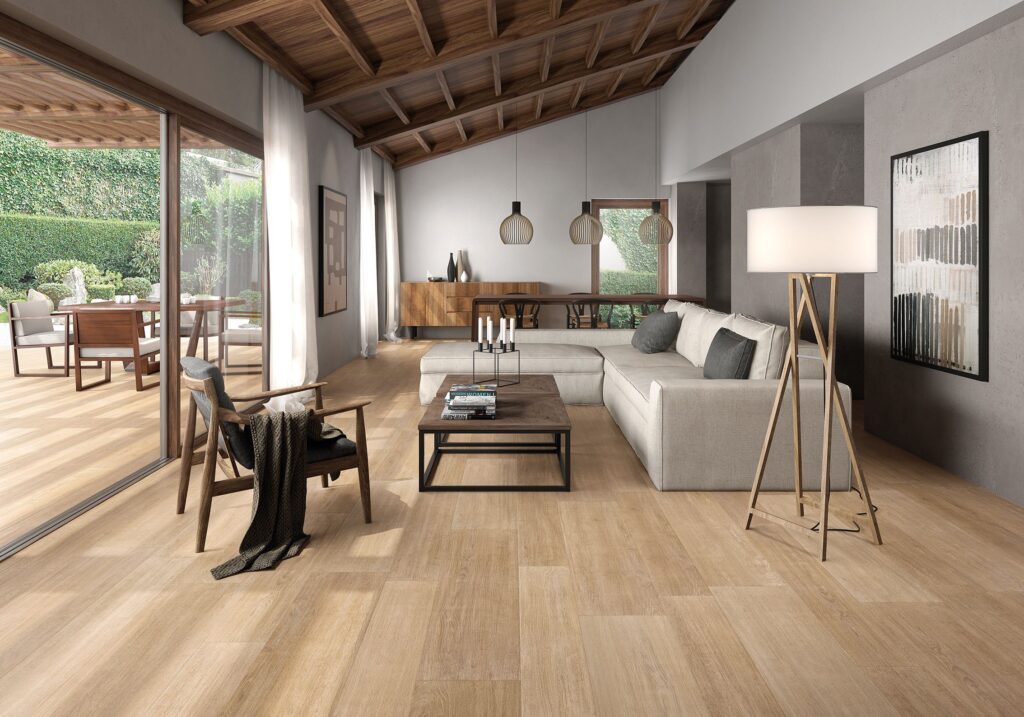
Minimalist Interior Style: Simple, Calm, and Functional
Minimalist interiors focus on simplicity and intentional design. Every element serves a purpose, and flooring is no exception.
Best Flooring Options
- Light wood flooring
- Neutral tiles
- Smooth laminate or vinyl
Color Choices
Minimalist flooring typically features:
- Soft whites
- Light beiges
- Pale grays
Design Tips for Minimalist Spaces
- Keep patterns to a minimum
- Use consistent tones throughout the home
- Avoid high contrast or overly bold designs
The goal is to create a calm and uncluttered environment where the flooring blends seamlessly with the overall design.
Transitional Style: Blending Classic and Modern
Transitional interiors combine traditional elegance with modern simplicity. Flooring should strike a balance between these two styles.
Recommended Flooring
- Engineered hardwood
- Neutral tiles
- Luxury vinyl with subtle textures
Color Palette
- Warm neutrals
- Medium wood tones
- Soft gray hues
Design Tips
- Avoid extremes keep designs balanced
- Use flooring as a bridge between styles
- Focus on versatility and timeless appeal
Industrial Style: Raw and Urban
Industrial design is inspired by warehouses and urban lofts, featuring raw materials and unfinished textures.
Ideal Flooring Choices
- Concrete
- Dark wood
- Stone look tiles
Color Scheme
- Charcoal gray
- Deep brown
- Black tones
Design Tips
- Highlight natural imperfections
- Pair with metal and exposed elements
- Keep the look rugged and authentic
Key Elements to Consider When Matching Flooring
Color Coordination
Color is one of the most influential factors in flooring selection.
How to Match Colors Effectively
- Coordinate flooring with wall colors and furniture
- Use contrast to create visual interest
- Stick to a consistent palette for cohesion
For example, light flooring paired with dark furniture creates a striking contrast, while similar tones create a more harmonious look.
Texture and Finish
Texture adds depth and personality to your flooring.
- Smooth finishes suit modern and minimalist styles
- Distressed textures enhance farmhouse designs
- Matte finishes offer versatility and practicality
Choosing the right texture can significantly impact the overall feel of a room.
Room Size and Layout
Flooring can visually alter the perception of space.
Tips Based on Room Size
- Light colors make small rooms feel larger
- Dark tones add warmth to large spaces
- Large planks or tiles create a more open look
Lighting Conditions
Lighting affects how flooring colors and textures appear.
- Natural light enhances darker tones
- Artificial lighting can change color perception
- Lighter flooring works well in dim spaces
Always test flooring samples in your home’s lighting before making a final decision.
Lifestyle and Functionality
Your daily routine should influence your flooring choice.
Considerations
- High traffic areas require durable materials
- Kitchens and bathrooms need water resistant flooring
- Homes with pets benefit from scratch resistant options
Balancing style with practicality ensures long term satisfaction.
Creating Flow Throughout Your Home
Consistency is key when designing your flooring layout.
Tips for a Cohesive Look
- Use the same flooring in connected areas
- Choose complementary materials for different rooms
- Maintain a consistent color scheme
Seamless transitions between spaces make your home feel more unified and spacious.
Common Flooring Mistakes to Avoid
- Choosing flooring based only on trends
- Mixing too many styles or patterns
- Ignoring the impact of lighting
- Overlooking durability and maintenance needs
Avoiding these mistakes will help you achieve a polished and timeless design.
Popular Flooring Options and Their Benefits
Hardwood Flooring
- Timeless and elegant
- Works with most interior styles
- Adds long term value to your home
Laminate Flooring
- Cost effective alternative to hardwood
- Wide variety of designs
- Easy to maintain
Vinyl Flooring
- Water resistant and durable
- Ideal for kitchens and bathrooms
- Available in realistic wood and tile looks
Tile Flooring
- Highly durable and versatile
- Perfect for bold designs
- Easy to clean and maintain
Bringing It All Together with the Right Flooring for Your Home
At theflooringfactoryoutlet.com, we understand that matching flooring with your home’s interior style is key to creating a space that feels unified, comfortable, and visually balanced. The right flooring choice goes beyond appearance it enhances the overall mood of your home by complementing your color palette, furniture, and décor style.
Whether you prefer the clean elegance of modern interiors, the warm and rustic feel of farmhouse design, or the calm simplicity of minimalist spaces, our wide range of flooring options helps you achieve your vision. By carefully considering design, texture, and functionality, you can select flooring that not only elevates your interiors but also supports your everyday lifestyle and long-term needs.