
Table of Contents
Your Complete Guide for Florida Homes
Choosing new flooring is one of the most important decisions you’ll make when updating or renovating your home. In Florida — with its warm temperatures, high humidity, coastal breezes, and occasional heavy rain — the flooring you select must look great AND stand up to the unique climate challenges of the region.
Two of the most popular choices among homeowners today are laminate flooring and vinyl flooring. Both offer modern designs, durability, and affordability compared with hardwood and traditional tile. But they perform differently in key areas such as moisture resistance, installation, comfort, and maintenance — factors that are especially important for Florida homeowners.
This guide walks you through everything you need to know about laminate and vinyl flooring, including their strengths, weaknesses, and how they compare so you can make the right choice for your Florida home.
What Is Laminate Flooring?
Laminate flooring is a synthetic flooring product made up of several layered materials. The topmost layer is a protective wear layer that resists scratches and daily wear. Beneath that is a high‑resolution image layer that realistically mimics the look of wood, stone, or tile. The core is made of a firm wood‑based material, and there is usually a backing layer for stability.
Laminate flooring is typically installed as a floating floor, meaning the planks snap and lock together over the subfloor without nails or glue. This makes installation faster and, in many cases, easier than traditional hardwood or tile.
What Is Vinyl Flooring?
Vinyl flooring is made primarily of synthetic materials and is available in a wide range of formats — most commonly Luxury Vinyl Plank (LVP) and Luxury Vinyl Tile (LVT). These products use printed layers to mimic wood, stone, and tile visuals and are topped with a durable finish layer that protects against wear and stains.
High‑quality vinyl flooring can be fully waterproof, making it one of the most moisture‑resistant flooring options available. Vinyl is known for its flexibility, comfort underfoot, and ability to handle a variety of environments in the home.
Comparing Laminate and Vinyl: Key Differences
Here’s a side‑by‑side look at how laminate and vinyl flooring differ in the most important areas for homeowners:
Moisture Resistance:
Laminate flooring can resist minor moisture, but prolonged exposure to water can cause swelling or damage. Vinyl flooring — especially high‑quality options — is designed to be fully waterproof, making it better suited to wet or humid areas.
Durability:
Both laminate and vinyl are durable, but they handle wear differently. Laminate excels at resisting scratches and is a good choice in areas with foot traffic, while vinyl tends to be more forgiving against dents and impacts.
Appearance:
Laminate often provides a very realistic wood‑grain appearance because of its high‑resolution surface layer. Vinyl has improved dramatically and can also mimic wood and stone beautifully, though there are noticeable differences depending on product quality.
Comfort Underfoot:
Vinyl is generally softer and warmer underfoot than laminate, which can feel firmer. This difference is especially noticeable in larger open‑plan spaces or rooms where you stand frequently.
Maintenance:
Laminate flooring requires cooler, damp cloth cleaning when needed and should not be saturated with water. Vinyl can handle more conventional cleaning methods like damp mopping, making it easier to maintain in kitchens, bathrooms, and laundry areas.

Pros and Cons of Laminate Flooring
Pros of Laminate Flooring
- Stylish and Realistic Visuals
Laminate flooring has made tremendous strides in visual authenticity. With detailed imagery and texture embossing, it can closely resemble hardwood or stone — providing a high‑end look without the maintenance challenges of natural materials. - Scratch Resistance
Laminate often comes with strong wear layers that resist scratches, scuffs, and everyday wear. This makes it a solid choice for living rooms, bedrooms, and family spaces where furniture and foot traffic are common. - DIY‑Friendly Installation
Many laminate products use a click‑and‑lock system, allowing boards to snap together easily. This floating installation method is friendly to DIY enthusiasts and can reduce installation expense and time. - Affordable Option
Laminate provides a cost‑effective way to achieve the look of hardwood or stone without the premium price tag associated with those natural materials.
Cons of Laminate Flooring
- Not Fully Waterproof
One of the biggest drawbacks of laminate is its susceptibility to water damage. Because it has a wood‑based core, prolonged moisture can cause it to warp or swell. This means it may not be the best choice for bathrooms, laundry rooms, or other moisture‑prone areas in Florida homes. - Harder Feel Underfoot
Laminate tends to be firmer and less cushioned than vinyl. While this is not a problem for many spaces, it may feel less comfortable in areas where you stand for long periods. - Subfloor Preparations Required
Laminate flooring requires a smooth, level subfloor for the best performance. Any imperfections can telegraph through the surface, so extra prep work may be needed before installation. - Limited Moisture Performance
Compared to vinyl, laminate does not handle humidity and spills as well — a significant consideration in Florida’s warm, moist climate.
Pros and Cons of Vinyl Flooring
Pros of Vinyl Flooring
- Waterproof Performance
Vinyl flooring is typically waterproof, making it ideal for kitchens, bathrooms, laundry rooms, and areas where occasional spills and humidity are expected. This characteristic is particularly valuable in Florida homes, where high humidity and storm‑related moisture can be common. - Comfortable Underfoot
Vinyl provides a softer, quieter feel compared to laminate. Many products also include attached underlayment or cushioned backing for added comfort. - Design Versatility
Vinyl flooring is available in a wide range of styles and designs — from wood looks to stone and tile appearances. Modern vinyl products can achieve convincing textures and aesthetics. - Easy Maintenance
Vinyl floors are easy to clean and require minimal effort to keep looking great. Regular sweeping, occasional damp mopping, and prompt attention to spills are usually all that’s needed. - Great for High‑Moisture Areas
Because vinyl is waterproof, it is often recommended for bathrooms, kitchens, and other spaces where moisture is a concern — a definite advantage in Florida’s diverse home environments.
Cons of Vinyl Flooring
- Variable Aesthetics
Lower‑quality vinyl can sometimes have an artificial or plastic appearance. While high‑end luxury vinyl does a great job mimicking natural materials, results vary between products. - Vulnerable to Sunlight Fading
In homes with large windows or areas that receive intense, direct Florida sunlight, some vinyl flooring may fade over time if not specifically designed to be UV‑resistant. - Potential for Dents
Although durable, vinyl can dent under extreme point loads from heavy furniture or sharp objects. In many cases, individual planks or tiles may need to be replaced rather than repaired. - Environmental Considerations
Vinyl is a synthetic product made from plastics. While many modern vinyl floors are low VOC and formulated to meet health standards, environmental impact is a consideration for some homeowners.
Cost Breakdown Overview
Cost is always an important factor when choosing flooring, but the overall investment goes beyond just the material price. You should also consider installation, preparation, and long‑term maintenance.
Laminate flooring is generally more affordable in terms of material cost and can be easier to install as a DIY project, which can reduce overall project expenses. However, if your home requires significant subfloor preparation, that can add to the cost.
Vinyl flooring often costs slightly more for high‑quality products, especially luxury vinyl planks or tiles. But because vinyl flooring handles moisture better and requires less special maintenance, many Florida homeowners find it a worthwhile investment — especially in rooms where water exposure is frequent.
When planning your flooring budget, consider factors like room size, subfloor condition, and whether professional installation is required. Getting multiple quotes from reputable flooring professionals can help ensure you get the best value for your investment.
Florida‑Specific Considerations
Florida’s climate is warm and humid year‑round, with frequent rain showers and coastal breezes. These conditions influence how flooring materials perform over time:
Humidity and Moisture
Laminate flooring’s wood‑based core is more vulnerable to moisture, even in controlled indoor environments with air conditioning. Vinyl flooring’s waterproof nature makes it more resilient to humidity and incidental water exposure.
Sunlight and Fading
Florida homes with lots of natural light — especially near windows and sliding doors — should consider UV‑resistant flooring options. Certain vinyl products offer enhanced protection against sunlight fading.
Coastal Living
Homes near the coast are exposed to salty air, humidity, and occasional storms. In these environments, flooring that handles moisture well and resists swelling, cupping, or warping is especially valuable.
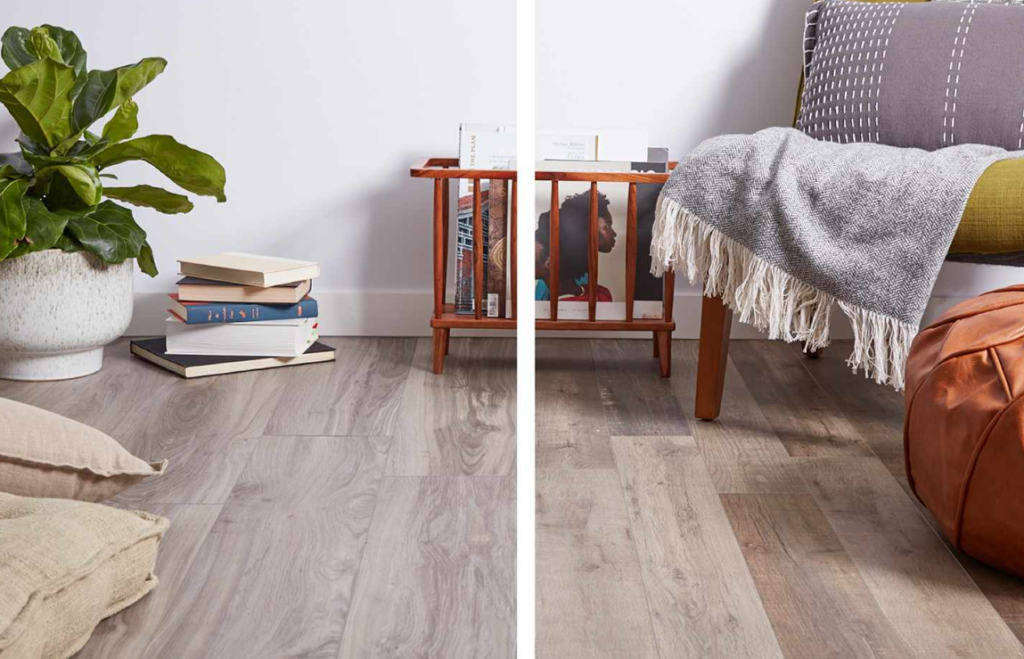
Best Room Applications for Each Flooring Type
Best Uses for Laminate Flooring
- Living rooms and family rooms
- Bedrooms
- Dining areas
- Guest rooms
Laminate is ideal in rooms where there’s minimal moisture and where style and scratch resistance are important.
Best Uses for Vinyl Flooring
- Kitchens
- Bathrooms
- Laundry rooms
- Hallways and entryways
- Basements and dens
Vinyl’s waterproof qualities make it a versatile choice across nearly every room in the house — especially those with moisture concerns.
Maintenance and Care Tips
Laminate Flooring Care
- Sweep or vacuum regularly to remove dirt and grit.
- Use a slightly damp cloth or mop when needed — avoid excess water.
- Place mats near entryways to reduce tracked‑in dirt.
Vinyl Flooring Care
- Sweep or vacuum frequently.
- Damp mop with a gentle cleaner.
- Wipe up spills promptly to prevent buildup.
Proper care and regular maintenance help extend the life and appearance of both laminate and vinyl flooring and ensure they continue to look great for years.
Which Is Right for Your Florida Home?
There’s no single answer that fits every homeowner — but here are a few general guidelines to help decide:
Choose laminate flooring if:
- You want a more authentic wood appearance.
- You’re installing flooring in dry interior spaces.
- You’re interested in a budget‑friendly flooring choice.
Choose vinyl flooring if:
- Moisture resistance is a priority.
- You want a softer, quieter surface underfoot.
- The flooring will be installed in kitchens, bathrooms, or high‑traffic areas.
For many Florida homeowners, the decision comes down to lifestyle, room usage, and long‑term performance in a humid environment. Vinyl flooring’s waterproof nature often makes it a versatile choice for a whole‑home solution — while laminate delivers beautiful visuals and durability where moisture isn’t a concern.
Final Thoughts
Choosing between laminate and vinyl flooring is about balancing style, durability, and practicality for your Florida home. Laminate flooring is ideal for dry areas like living rooms, bedrooms, and dining spaces, offering a realistic wood appearance and strong scratch resistance. Its ease of installation makes it appealing for DIY projects, while its aesthetic quality can elevate any room. However, because Florida’s climate is humid and prone to occasional moisture, laminate performs best in spaces where water exposure is minimal. Careful maintenance and moisture precautions are essential to ensure it lasts for many years.
Vinyl flooring, on the other hand, is highly versatile and waterproof, making it perfect for kitchens, bathrooms, laundry rooms, and other high-traffic or moisture-prone areas. Its softer feel underfoot, quiet surface, and wide range of design options allow homeowners to achieve the look of wood, tile, or stone while maintaining comfort and durability. By considering room usage, lifestyle, and Florida’s unique climate, you can confidently choose the flooring that best fits your needs, creating a beautiful and functional home that stands the test of time.